
Official NoticeBuy only from authorized TOZO channels — beware of imitation websites.

WorldwideFree shipping to 200+ countries and regions.

Global PartnersRetail & distribution programs available for overseas buyers.

0%

Choosing the best AR Display Glasses in 2026 will require more than comparing screen brightness or camera resolution. Global buyers must examine comfort, language support, software compatibility, repair access, and regional connectivity. A beautiful prototype can still become frustrating after two hours of daily wear.

Bernard Kress, a longtime augmented-reality product leader, has described AR glasses as “the next computing platform.” That view helps explain the market’s direction. The strongest products may blend navigation, translation, remote assistance, and hands-free information into ordinary-looking frames. Yet the industry remains uneven. Battery life can disappoint. Prescription options may be limited. Some displays look impressive indoors but fade under direct sunlight.

Real-world testing matters.

This guide evaluates leading AR Display Glasses for international buyers through practical use cases. We consider field of view, optical clarity, weight distribution, microphone performance, privacy controls, and ecosystem support. We also examine warranty coverage, import limitations, app availability, and after-sales service. These details often matter more than a polished launch video.

No single model will suit everyone. A logistics worker may prioritize durability and voice control. A traveler may value translation and lightweight frames. A developer may need open software tools and reliable spatial tracking. Our comparisons will identify strengths, weaknesses, and uncomfortable compromises. Some conclusions may change as firmware improves or new standards emerge. That uncertainty deserves honesty. The best choice is not always the most advanced device. It is the pair that performs consistently, fits naturally, and remains useful after the novelty fades.
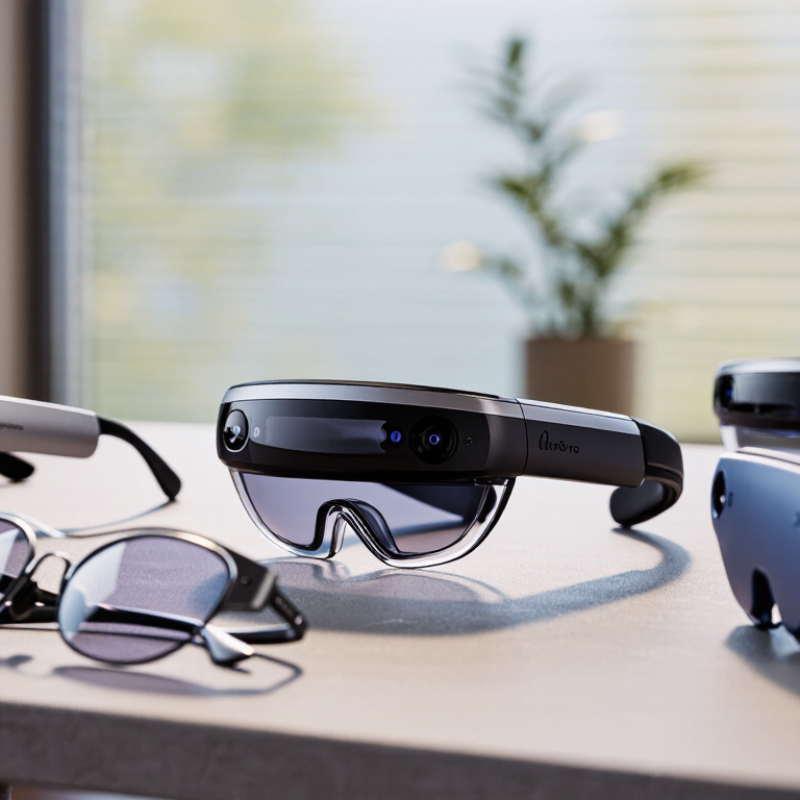
2026 Best AR Display Glasses for Global Buyers?

What AR Display Glasses Are and How They Work

What AR Display Glasses Are and How They Work

AR display glasses place digital images inside the wearer’s real-world view. Unlike ordinary screens, they use optical combiners, waveguides, or small projectors. These systems guide light toward the eyes while preserving the surrounding scene. Tiny cameras and motion sensors track head movement and nearby surfaces. A processor then adjusts icons, text, or three-dimensional objects. The result can resemble a floating navigation arrow beside a street sign.

Market data shows growing commercial interest, but forecasts vary widely. Grand View Research estimated the global smart glasses market at about USD 1.3 billion in 2023, with strong growth through 2030. MarketsandMarkets also projects double-digit annual expansion for augmented reality glasses. These figures describe market potential, not guaranteed user comfort. The experience is not yet seamless.

Display brightness matters outdoors. Battery capacity affects weight and wearing time.

A practical fitting test can reveal pressure near the nose after only twenty minutes. Prescription compatibility also differs between models. Some glasses depend on a paired phone or wireless connection, while others process basic tasks locally.

Latency, field of view, privacy controls, and language support deserve careful checking. A bright screen may still feel weak in sunlight. That is an easy detail to miss.

Global buyers should compare independent specifications, regional support, warranty terms, and real-world demonstrations before choosing.

Key Features Global Buyers Should Compare in 2026

Global buyers comparing AR display glasses in 2026 should begin with image quality, not appearance. A clear 1080p-equivalent image can still feel weak outdoors. Check measured brightness, contrast, field of view, and edge clarity. Try reading a spreadsheet near a bright window. Comfort matters more after thirty minutes. Look for balanced weight, adjustable nose supports, and lenses compatible with prescription inserts. A wide field of view sounds impressive, but it may increase visual fatigue.

Device compatibility deserves careful testing. Confirm support for your phone, laptop, operating system, and preferred connection standard. Some glasses need an adapter, while others rely on software that changes by region. Test subtitles, cursor control, and head tracking before purchase. Latency should remain low during video playback and remote work. Published battery figures often reflect ideal conditions. Ask how brightness, wireless use, and temperature affect actual runtime.

Global buyers should also compare data handling, repair access, and warranty terms. Cameras, microphones, and location features require clear privacy controls. Choose products with transparent policies and recognized electrical and radio certifications for your market. Local language support can be as important as technical specifications. Verify return shipping, replacement parts, and service response times. Independent reviews help, but testing methods differ. I would not trust a single rating. A short trial with real documents, travel lighting, and daily calls reveals more than a polished specification sheet.

2026 Best AR Display Glasses for Global Buyers? - Key Features Global Buyers Should Compare in 2026

Comparison Dimension Recommended Minimum Balanced Target for 2026 High-End Target Why Global Buyers Should Compare It
Display technology Micro-OLED or LCOS Micro-OLED with high pixel density High-efficiency micro-OLED or advanced waveguide system The optical engine affects contrast, black levels, power consumption, and outdoor readability.
Resolution per eye At least 1,920 × 1,080 pixels Approximately 1,920 × 1,080 to 2,560 × 1,440 pixels Above 2,560 × 1,440 pixels Higher resolution improves text clarity, virtual-monitor use, and fine graphical detail.
Field of view Approximately 35° diagonal Approximately 40°–50° diagonal 50° or wider diagonal A wider field of view makes virtual screens and augmented content feel less constrained.
Refresh rate 60 Hz 90 Hz 120 Hz where supported Higher refresh rates reduce perceived blur and improve motion smoothness, but usually increase power use.
Brightness At least 500 nits at the virtual image Approximately 800–1,200 nits Above 1,200 nits, with effective light control Brightness specifications are measured differently, so buyers should check the test method and outdoor performance.
Contrast and optical clarity Clear central image with limited edge distortion Uniform focus across most of the viewing area Low distortion, low chromatic aberration, and stable edge clarity Optical quality determines reading comfort and whether a large virtual screen is practical for long sessions.
Weight Below 100 g Approximately 70–90 g Below 80 g without an external battery or computing module Lower weight reduces nose and temple pressure during travel, office work, and extended viewing.
Head tracking Three-degrees-of-freedom tracking Stable three-degrees-of-freedom tracking with low latency Six-degrees-of-freedom tracking with spatial anchoring Six-degrees-of-freedom tracking is more suitable for anchored virtual objects and room-scale applications.
Input methods Physical buttons and connected-device control Buttons, touch controls, and smartphone control Hand tracking, voice input, gaze selection, and physical controls Multiple input options improve accessibility and reduce dependence on a single operating system.
Connection standard USB-C video input with DisplayPort Alt Mode USB-C plus wireless connectivity through Wi-Fi and Bluetooth USB-C, Wi-Fi 6 or newer, and Bluetooth 5.2 or newer Buyers should verify device compatibility because not every USB-C port supports video output.
Compatibility Major operating systems with direct video output Broad support for current smartphones, laptops, tablets, and selected gaming devices Cross-platform support with documented regional and device limitations Regional firmware, application availability, and device-specific restrictions can affect the actual buying experience.
Battery operation Powered through a connected device Approximately 2–4 hours with an integrated or external battery 4 hours or more under typical mixed use Standalone operation improves mobility, while wired power can reduce weight and heat in the glasses.
Audio system Stereo speakers with basic microphone Directional speakers, dual microphones, and adjustable volume Spatial audio, beamforming microphones, and strong sound leakage control Audio quality matters for navigation, calls, translation, gaming, and shared public spaces.
Prescription support Replaceable prescription insert or basic adjustment Prescription inserts covering common correction ranges Wide prescription range, adjustable fit, and certified optical inserts Prescription availability, lens standards, and import regulations vary by market.
Environmental protection Basic splash resistance IPX2–IPX4 level protection, where officially tested Higher certified protection with clear limits for rain, dust, and immersion An IP rating is useful only when the testing standard and warranty exclusions are clearly stated.
Privacy controls Microphone mute and visible recording indicator Hardware mute, permission management, and clear status indicators Local processing options, encrypted data handling, and configurable sensors Privacy requirements and data-protection laws differ across regions, especially for cameras and voice features.
International support Online manuals and basic remote support Multi-language software, regional warranty, and replaceable accessories Global warranty coverage, local repair channels, and region-independent software access After-sales service, customs handling, and replacement-part availability can outweigh small specification differences.
Best use case Personal screen extension, media viewing, and basic navigation Productivity, travel, gaming, translation, and everyday media Professional visualization, industrial workflows, spatial computing, and development The best AR glasses should be selected according to the buyer’s workflow rather than specifications alone.

Note: The figures above are practical comparison ranges based on commonly published specifications for AR display glasses and related wearable displays. Actual performance may vary with optical design, measurement method, ambient lighting, connected devices, software, regional certification, and usage conditions.

Top AR Display Glasses by Use Case and Buyer Needs

2026 Best AR Display Glasses for Global Buyers

For navigation, choose glasses with bright overlays, stable positioning, and clear outdoor visibility. A small text prompt should remain readable beside moving traffic. Keep controls simple. Voice input helps when hands are occupied, but noisy streets can reduce accuracy. Test the display during daylight, not only in a showroom.

Office buyers may value private notifications, document viewing, and comfortable wear over several hours. Check compatibility with phones, computers, operating systems, and workplace security policies. For field technicians, durability, replaceable parts, and reliable connectivity matter more than stylish frames. Look for adjustable brightness and controls that work with gloves. Learning users may need lightweight designs, recorded instructions, and low visual strain. Accessibility needs vary widely, so adjustable text size and audio support deserve practical testing.

Battery life depends on brightness, streaming, and network use. Ask for measured runtime, not only the advertised figure. Global buyers should verify charging standards, language support, repair access, warranty coverage, and local privacy requirements. No model wins every test. I once overvalued image sharpness and underestimated nose pressure after two hours. That mistake changed my buying checklist. A comfortable frame can outperform a technically stronger display during daily use. Request a real demonstration with your own phone, lighting, and typical tasks. Different users notice different weaknesses.

2026 Best AR Display Glasses for Global Buyers

Top AR display glasses by use case and buyer needs. The chart uses a normalized 0–100 priority index based on practical requirements for field of view, readability, comfort, battery endurance, and connectivity.

Industrial maintenance and remote assistance place the highest priority on readability, connectivity, and long operating time, while entertainment buyers typically value field of view and visual immersion more strongly.

Compatibility, Comfort, Privacy, and Regional Requirements

2026 Best AR Display Glasses for Global Buyers?

Compatibility, comfort, privacy, and regional requirements should guide every AR glasses purchase. A bright display means little if the glasses fail with your phone, operating system, or essential apps. Check connection standards, supported devices, language options, and update policies before ordering. Some models may mirror content smoothly but struggle with navigation or calls. That difference appears during daily use.

Comfort needs practical testing, not only attractive specifications. Wear the glasses for at least thirty minutes. Check nose pressure, temple weight, heat, and clarity while walking. Prescription users should confirm lens support with a qualified optical professional. Privacy deserves equal attention. Choose devices with clear camera indicators, local processing options, and controllable permissions. Avoid recording in private spaces without consent. Regional requirements can affect wireless functions, chargers, warranty service, and data handling. Regulations may differ between countries and change over time.

Tips: Compare the official technical sheet with local retailer information. Confirm return terms before importing. Test compatibility with your actual phone, not a newer model. Check whether replacement parts are available in your region. Keep expectations realistic. Even excellent glasses may feel awkward under bright sunlight or during long reading sessions. I still find comfort difficult to judge from specifications alone. Face shape, hairstyle, and prescription needs can change the experience considerably. A careful buyer should leave room for that uncertainty.

Pricing, Availability, Warranty, and Purchase Considerations

2026 Best AR Display Glasses for Global Buyers?
Pricing, Availability, Warranty, and Purchase Considerations

Prices for AR display glasses may range from about $300 to over $1,500 in 2026. Prices vary sharply. Basic models usually provide notifications, navigation, and screen mirroring. Advanced versions may add cameras, spatial tracking, stronger processors, and prescription support. A practical test matters more than a feature list. Check text clarity in sunlight, screen stability during walking, and comfort after thirty minutes.

Availability can shift. Some sellers offer global shipping, while others restrict orders by region. Confirm delivery times, import taxes, charger compatibility, and local support before payment. A low advertised price can become expensive after customs fees. Verify the seller’s business address, payment protection, return period, and stock status. Do not rely only on a “pre-order” label.

Warranty terms deserve careful attention. International coverage may exclude batteries, accidental damage, prescription lenses, or repairs outside the purchase country. Ask whether the seller pays return shipping and how long replacement processing takes. Keep the invoice, serial information, and unboxing photos. They can support a warranty claim. I would also test the glasses immediately, because a comfortable frame can still cause eye strain or heat near the temples. My own buying rule is imperfect: I value reliable returns over the newest display specification, although that choice may reduce available features.

FAQS

What are AR display glasses?

AR display glasses place digital images within your real-world view. They can show text, icons, subtitles, or navigation arrows. The surrounding scene remains visible.

How do AR display glasses create floating images?

Optical combiners, waveguides, or tiny projectors guide light toward your eyes. Cameras and motion sensors track head movement and nearby surfaces. A processor adjusts the displayed content.

What specifications should buyers compare?

Check brightness, contrast, field of view, edge clarity, and image resolution. Try reading a spreadsheet beside a bright window. Numbers can mislead.

How can buyers test comfort properly?

Wear the glasses for at least thirty minutes. Notice nose pressure, temple weight, heat, and lens clarity. Walk while testing them. Comfort varies with face shape and hairstyle.

Can people with prescription lenses use these glasses?

Compatibility differs between models. Check support for prescription inserts with a qualified optical professional. Some frames may feel tight after fitting. That detail is easy to miss.

What devices and connections should buyers check?

Confirm compatibility with your actual phone, laptop, operating system, and essential applications. Some glasses need adapters or wireless connections. Test subtitles, cursor control, calls, and head tracking before purchase.

How long does the battery usually last?

Published battery figures often show ideal conditions. Brightness, wireless use, temperature, and processing can reduce actual runtime. Ask for real-world testing. Expect variation.

What privacy features matter?

Check camera indicators, microphone controls, permissions, and local processing options. Clear policies should explain data handling and location features. Avoid recording people in private spaces without consent.

What regional issues should global buyers consider?

Check language support, chargers, wireless functions, certifications, warranty service, and replacement parts. Return shipping may cost more across borders. Verify local support before importing. I would not trust one specification sheet alone.

Conclusion

AR Display Glasses combine compact screens, cameras, sensors, speakers, and wireless connectivity to place digital information within the wearer’s field of view. In 2026, global buyers should compare display clarity, brightness, field of view, refresh performance, battery life, weight, audio quality, durability, and control methods. The best choice depends on the intended use, such as navigation, remote assistance, productivity, entertainment, education, or industrial visualization. Buyers should also consider prescription-lens support, comfort during extended wear, device compatibility, and ease of setup.

Privacy and regional requirements are equally important. Users should review camera indicators, data handling options, language support, wireless standards, and local compliance considerations before purchasing. Pricing can vary according to display capability, accessories, software features, and distribution region. It is also essential to confirm availability, delivery conditions, return policies, warranty coverage, repair support, and software update expectations. A careful comparison of performance, comfort, security, total ownership cost, and after-sales service can help international customers select AR Display Glasses that fit both their practical needs and local market conditions.

Oliver

Oliver

Oliver is a professional marketing specialist who helps readers understand the products, services, and expertise behind his company. With a strong command of the company’s product range, he turns technical details into clear, practical information, making it easier for customers to compare options......