
Official NoticeBuy only from authorized TOZO channels — beware of imitation websites.
WorldwideFree shipping to 200+ countries and regions.
Global PartnersRetail & distribution programs available for overseas buyers.
Choosing a Portable Waterproof Bluetooth Speaker starts with how and where you will use it. A speaker for a shower has different needs from one carried on a kayak or packed for a beach day. Think about weight, grip, and where it will sit. Small details matter. A slippery body can be awkward with wet hands, while exposed charging ports need secure covers. Check the manufacturer’s IP rating rather than relying on the word “waterproof.” For example, IPX7 describes a specific water-immersion test, not protection from every condition. Salt water, sand, drops, and aging seals can still cause problems. Rinse and dry the speaker as its manual recommends.
Sound and battery life deserve equal attention. A compact model may be easy to carry, yet struggle to fill a large outdoor space. If possible, listen at the volume you expect to use and notice whether voices sound clear or bass becomes distorted. Battery estimates vary with volume, temperature, and connection use, so treat advertised hours as a guide, not a promise. Bluetooth range also depends on walls, obstacles, and the connected device. There is no perfect pick. It is easy to focus on a dramatic bass claim and overlook comfort or charging access. Compare the features you will actually use, confirm warranty and care details, and choose a speaker that fits your routine—not just its specification sheet.
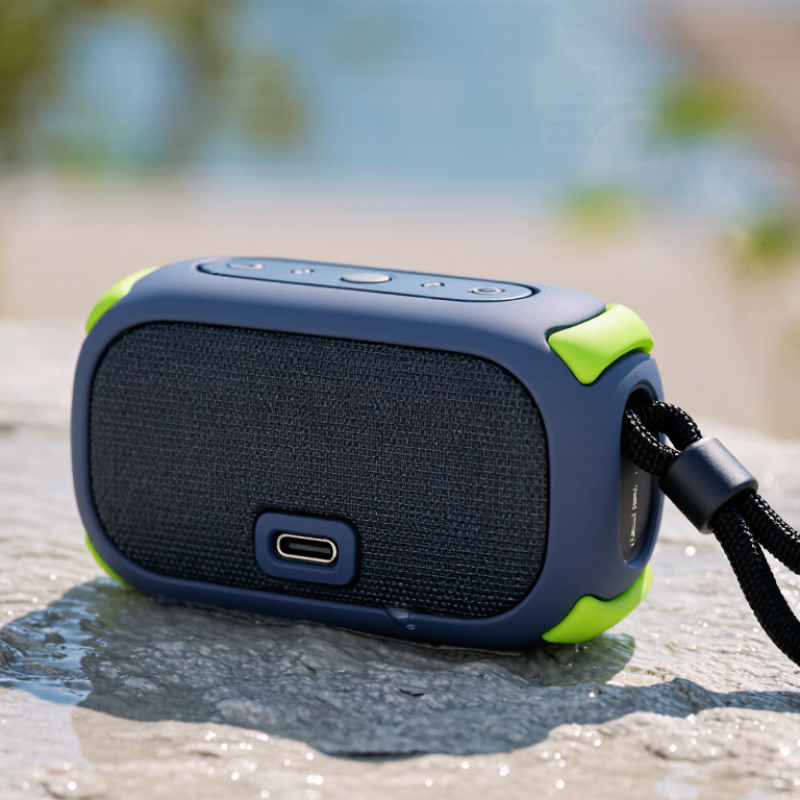
Choose a speaker around the way you actually listen, not an imagined adventure. A kitchen counter needs clear voices at low volume; a campsite needs sound that carries without constant distortion. Think about who will listen, how many hours it must play, and whether you need a clip, handle, or compact shape. Small details matter. A speaker that is awkward to carry may stay at home.
Outdoor use is common, but not universal. The Outdoor Industry Association’s 2024 Outdoor Participation Trends Report says 175.8 million Americans took part in outdoor recreation in 2023, equal to 57.3% of the population aged six and older. If you hike, picnic, or spend time by the pool, check the speaker’s stated water-resistance rating and whether it can handle dust or splashes. “Waterproof” alone is vague. Read the rating carefully, and don’t assume it means the speaker can be submerged.
For shared listening, prioritize balanced sound and simple controls; booming bass can quickly become tiring in a small room. The WHO-ITU safe-listening standard uses 80 dB for up to 40 hours weekly as a reference for adults using personal audio devices. A portable speaker is different, so treat that figure as context, not a precise limit. I’d also test button placement with wet hands if possible. Specs help, but they don’t tell you whether the speaker feels right in real use.
A portable speaker’s waterproof label is useful, but it is not a promise of safety in every wet setting. Look for an IP rating, such as IPX4 or IPX7. The first digit describes dust protection; “X” means no dust rating is stated. The second digit refers to water resistance. IPX4 is designed for splashes, while IPX7 typically means temporary immersion in fresh water under specified test conditions. Check the product instructions for the exact depth and time. Read the fine print.
Real life is less controlled than a test tank. A speaker dropped into a pool may face chlorinated water, while a beach brings salt, sand, and grit. These can wear seals or block ports, even when the rating sounds reassuring. That matters. After exposure, rinse the exterior gently with fresh water if the instructions allow, then dry it fully. Keep charging ports closed, and never connect a charger while the speaker or port is wet. I have learned that a tiny grain of sand can be more troublesome than a quick splash.
Think about where you will carry it. For a bathroom shelf or a picnic with light rain, splash resistance may be enough. For boating or accidental drops, stronger water protection offers more margin, but it is not invincible. Check that the rating applies to the complete speaker, not just a removable cover. Seals age, and rough handling can weaken them. A little caution is still part of waterproofing.
When comparing sound quality, listen beyond the volume number. A speaker can sound loud indoors but thin beside a windy shoreline. Try voices, bass, and cymbals at the same volume you would use outside. Speech should stay clear, and bass should not rattle the casing. Listen outdoors. Waterproofing protects against splashes, but it does not guarantee rich sound. I once trusted a dramatic demo track and missed how muddy spoken audio became at low volume. That detail matters for podcasts and calls.
Battery claims are useful, but treat them as best-case estimates. Playback time often drops with louder volume, strong bass, and a busy wireless connection. Look for a capacity that suits your actual outing: a short swim session needs less than a full day at a campsite. A battery indicator is helpful, though some show only broad steps. Not always precise. If possible, test the speaker at your usual listening level before relying on it for a long trip.
Check the charging method as carefully as the battery size. A common USB-C connection is convenient when your phone or other gear uses the same cable. Some speakers charge slowly, so check the stated charging time, not just the port type. A sealed flap can keep water out, but it may be fiddly with cold or wet fingers. Also check whether playback works while charging; that feature can be useful, though it may add heat or limit portability.
| Speaker Type | Sound Quality | Typical Advertised Battery Life | Charging Options to Look For | Water and Dust Protection | Best Suited For |
|---|---|---|---|---|---|
| Compact / Pocket-Size | Convenient for podcasts, spoken audio, and casual listening. Smaller enclosures generally produce less bass and may sound less full at high volume. | About 6–12 hours per charge, depending on the model and listening conditions. | USB-C is convenient and widely used. Check whether a charging cable is included and whether the speaker can play while charging. | Look for a stated IP rating. IPX7 indicates protection against temporary immersion in water under specified test conditions; it does not indicate dust protection. | Day trips, desk use, and light packing where small size matters most. |
| Everyday / Mid-Size | Often offers a fuller sound and stronger bass than pocket-size speakers. Stereo playback depends on the speaker’s design; some compact units use a single full-range driver. | About 10–20 hours per charge, depending on volume, audio content, and features in use. | USB-C is a practical choice. Some models also offer a USB output for charging a phone, which can reduce the speaker’s remaining play time. | IP67 means dust-tight protection and protection against temporary immersion in water under specified test conditions. | Home, picnics, and general outdoor listening. |
| Rugged / Larger Portable | Typically has more room for larger drivers and a fuller presentation, but sound quality still depends on design, tuning, and listening distance. | About 15–30 hours per charge; advertised figures may assume moderate volume and limited use of extra features. | Check charging time, cable compatibility, and whether the charging port has a secure waterproof cover. A power-bank function is useful but draws on the speaker’s battery. | IP67 is a useful target for dusty or wet environments. The rating applies when the device is intact and used as specified. | Longer outings, campsites, and settings where a larger speaker is practical. |
Selection tip: Battery-life figures are typical advertised ranges, not guaranteed results. Higher volume, bass-heavy music, temperature, and wireless features can shorten playback time. Compare speakers at a similar size and listening level, and check the exact IP rating and charging specifications before buying.
A portable waterproof Bluetooth speaker should feel easy to carry, not merely small on a product page. Check its weight, shape, and grip: a smooth cylinder can slip from wet hands, while a loop or textured sides help at a pool or campsite. Consider where it will sit in your bag, too. A bulky model may sound fuller, but you may leave it at home.
Connectivity matters outdoors. Look for stable pairing, simple controls, and a stated wireless range, remembering that walls, people, and trees can weaken the signal. If you plan to connect two devices, check how switching works before buying. I once assumed every speaker would reconnect quickly; it didn’t, and that small delay became annoying. Battery life also varies with volume, so treat advertised figures as estimates.
Tips: Check the exact water-resistance rating and what it covers; waterproof claims are not all alike. Rinse off salt or sand only as the care instructions allow, and dry charging ports before plugging in. A removable strap can help, but test its stitching and clasp. Small details count. A speaker that survives splashes may still dislike drops, so consider a protective edge if you’ll carry it on rough trails.
Useful features matter more than a crowded spec sheet. Bluetooth SIG’s 2024 Market Update projects 7.5 billion Bluetooth-device shipments annually by 2028, across all product categories—not speakers alone. Pairing stability, easy-to-reach buttons, and clear sound at modest volume matter more than a long codec list. Check whether the speaker reconnects quickly after you walk back into the room. Small detail. Easy to overlook.
For water resistance, read the actual rating. Under IEC 60529, IPX7 testing covers temporary immersion in still water up to one meter for 30 minutes; it does not guarantee protection in every real-world situation. Rinse off sand or pool residue only as the manual directs. Then inspect the warranty: note its length, battery exclusions, and whether water damage is covered. A rating and a warranty are not the same promise. Compare runtime at realistic volume, charging time, and repair options against the price. I’d also check whether the charging port has a snug cover; it is easy to forget until grit gets inside.
Check useful features, warranty coverage, and overall value—especially the speaker’s water-resistance rating.
The bars show the numeral in each IPX rating, not a linear measure of protection. IPX4 covers splashing; IPX5 and IPX6 cover water jets; IPX7 covers temporary immersion in water up to 1 metre for 30 minutes. IPX8 covers immersion under conditions specified for the product. Before buying, check the exact rating, battery life, portability, and whether the warranty covers water damage.
Match it to your routine. For a kitchen counter, clear voices at low volume may matter more than heavy bass. A bulky speaker may stay home.
Consider its shape, carrying handle, battery life, and stated protection from water or dust. A campsite needs sound that stays clear outdoors, not just impressive volume indoors.
IPX4 is designed for splashes. IPX7 typically covers temporary immersion in fresh water under specified test conditions. Check the instructions for exact limits; the rating is not a blank check.
Not automatically. Salt, sand, and pool chemicals can affect seals or block ports. Rinse and dry the speaker only as its instructions allow. Tiny grains matter.
Listen to speech, bass, and cymbals at your usual volume. Try it outdoors if possible. I’ve trusted loud demos before and missed muddy voices.
Match the estimate to your outing. A short swim needs less power than a full day at a campsite. Louder playback and strong bass can shorten battery life.
Check the connector, stated charging time, and battery indicator. A shared USB-C cable can simplify packing, but a sealed flap may be fiddly with wet fingers.
No. Keep the charging port dry, and never connect a charger while the speaker or port is wet. This is easy to overlook.
Choosing the right Portable Waterproof Bluetooth Speaker starts with understanding how and where you plan to use it. Consider whether it will be for travel, outdoor activities, or everyday listening, then check its waterproof rating and protection against dust, splashes, or brief submersion to ensure it suits the environment. A suitable rating can help prevent damage, but it is still important to follow the speaker’s care instructions.
Compare sound clarity and volume, battery life, and available charging options to find a balance that fits your routine. Also consider weight, size, connectivity range, and build quality, especially if you plan to carry it often or use it outdoors. Useful extras may include hands-free calling or convenient controls, while warranty coverage and price help you judge overall value. By weighing these factors together, you can choose a speaker that is practical, reliable, and enjoyable to use.