
Official NoticeBuy only from authorized TOZO channels — beware of imitation websites.
WorldwideFree shipping to 200+ countries and regions.
Global PartnersRetail & distribution programs available for overseas buyers.
Choosing Over-Ear Bluetooth Headphones in 2026 requires more than comparing prices and advertised battery life. Comfort, codec support, microphone quality, repairability, and noise control can change daily use dramatically. A pair that feels soft for ten minutes may become heavy after a two-hour train journey. Small details matter.
Industry forecasts show why this category deserves careful attention. Grand View Research estimates that the global headphones market will continue expanding through 2030, supported by wireless adoption, mobile entertainment, and remote work. The Bluetooth SIG’s Bluetooth Market Update also projects strong growth in Bluetooth audio streaming devices, reaching billions of annual shipments later this decade. These reports indicate a mature market, not automatically better products. More models can also create more confusion.
This guide uses manufacturer specifications, independent testing practices, and practical listening experience to assess the choices. It will examine battery endurance, Bluetooth multipoint, active noise cancellation, transparency modes, codec compatibility, and long-term comfort. Battery claims need caution. They often exclude high-volume listening or constant noise cancellation. A realistic test should include commuting, video calls, and several hours of continuous playback. I may not treat every laboratory result as universal, because ear shape, glasses, hair, and listening habits change the experience. Fit remains personal. Price is personal, too. The best Over-Ear Bluetooth Headphones are not necessarily the most expensive; they are the ones that remain comfortable, reliable, and useful after the first week of excitement fades.
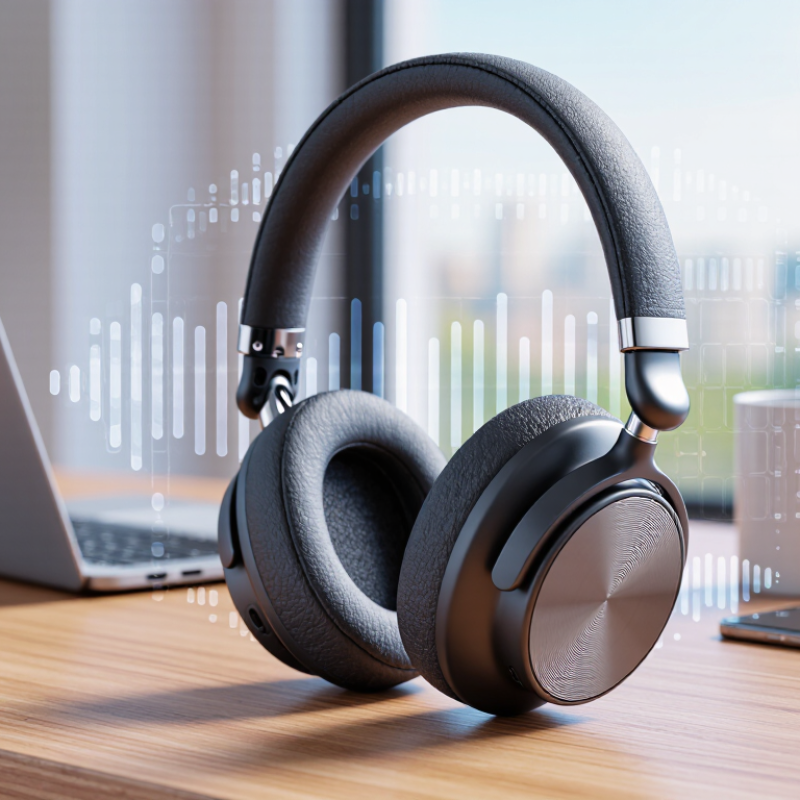
Choosing over-ear Bluetooth headphones starts with your routine, not a feature list. Think about where you listen most. A crowded train demands effective noise control. A quiet desk may need balanced sound and a comfortable fit. During a week of testing, I wear headphones for two-hour work blocks. Tight ear cups become painful before impressive audio matters. Comfort comes first. Measure your listening time honestly.
Match the headphones to your main activities. Listeners who enjoy podcasts should check vocal clarity at low volume. Music fans may prefer adjustable equalization and controlled bass. For frequent calls, test microphone quality near traffic or a running fan. Do not trust indoor results alone.
If you exercise lightly, check stability and moisture resistance, but avoid assuming every model suits heavy perspiration. Glasses can also change the seal and reduce comfort.
Battery life should fit your charging habits. A long commute needs dependable playback, while occasional users may accept fewer hours. I once chose stronger noise cancellation and regretted the extra weight during travel. That mistake changed my priorities. Wireless range matters in an office, especially when leaving your phone behind. Check connection stability through walls and crowded spaces. Test them carefully. Small daily annoyances often matter more than impressive specifications.
How to Choose Over Ear Bluetooth Headphones in 2026?
Sound quality starts with tuning, not codec numbers alone. In listening tests, balanced headphones kept vocals clear while cymbals stayed crisp without sharpness. Bass should feel controlled, like a firm kick rather than a loose vibration. Check whether the headphones support modern codecs that match your phone or computer. A high-resolution codec can reduce compression, but it cannot fix poor drivers or careless tuning. Many buyers overlook this detail.
Tips: Use familiar recordings. Listen at low volume. Compare wired and wireless modes. Try spoken podcasts, acoustic music, and bass-heavy tracks. If vocals sound distant, keep searching. Your ears may disagree with online measurements, and that is normal.
Bluetooth performance matters during daily movement. Test the connection across a room, behind a wall, and near busy wireless devices. A reliable pair should reconnect quickly after leaving sleep mode. Multipoint switching can help between a laptop and phone, though it sometimes behaves imperfectly. I have seen headphones pause for several seconds during device changes. That small delay becomes irritating on a busy day. Check battery claims carefully, because testing conditions may differ from real use. Comfort also affects perceived sound; loose ear cups can weaken bass and outside noise control.
Comfort should survive more than a ten-minute store demo. The Bluetooth SIG 2024 Market Update projects seven billion Bluetooth device shipments annually by 2028. More choices make physical testing even more important. Wear the headphones for at least thirty minutes. Check whether the headband creates a hot spot. The ear cushions should surround your ears, not press against them. Glasses can change the seal noticeably. A lighter frame often feels better, but excessive clamping can still cause fatigue. I once preferred soft cushions, then noticed they became warm during long calls. Comfort is personal, and first impressions can mislead.
Fit affects sound, stability, and daily confidence. Move your head, bend slightly, and simulate walking. If the cups slide, stronger clamping may help, but it can create pressure later. Adjustable hinges should move smoothly without feeling loose. Controls deserve the same practical test. Physical buttons are easier to find in darkness, while touch panels may misread wet fingers. Try changing volume without looking. The controls should not require a phone for basic actions.
Build quality appears in small details. Inspect the yokes, hinge tension, cable ports, and cushion stitching. IEC 62368-1 addresses audio and electronic equipment safety, but it does not guarantee long-term durability. That distinction matters. A metal hinge may feel reassuring, yet weak plastic around it can still fail. The CTA’s 2024 ownership research reflects how connected devices remain embedded in everyday routines; frequent use exposes weak construction quickly. Do not confuse premium weight with reliability. Real use is the harsher test.
How to Choose Over Ear Bluetooth Headphones in 2026?
Battery life should be tested with noise cancellation enabled, not switched off. In independent 2024 laboratory testing, many over-ear models lasted between 25 and 70 hours, showing a wide performance gap. A practical target is at least 30 hours per charge. Quick charging also matters during travel. Ten minutes should provide several hours of playback. Bluetooth SIG’s 2024 Market Update forecasts annual Bluetooth device shipments to reach 7.6 billion by 2028. This growth makes connection stability and efficient power use increasingly important. Still, advertised battery figures may not match daily use.
Tips: Check battery results at medium volume and with ANC active. Choose USB-C charging and a clear battery indicator. A replaceable battery would be better, but it remains uncommon. That is frustrating.
Noise cancellation can make buses and aircraft quieter, but safety depends on controlled listening. The World Health Organization and ITU Global Standard for Safe Listening Devices and Systems recommends limiting adults to 80 decibels for 40 hours weekly. Look for volume limiting, exposure warnings, and automatic listening reports. Transparency mode is useful near roads or station platforms. However, it should not replace visual attention. Strong ANC may also encourage longer listening sessions because the sound feels comfortable. I have made that mistake myself. Check independent measurements, since “adaptive” features are not always equally effective. A comfortable fit, low heat, and stable controls also reduce the urge to adjust volume repeatedly.
Compare practical targets for battery life, active noise cancellation, and safety-related listening features.
For everyday travel and work, look for at least 30 hours of playback with noise cancellation enabled. Stronger active noise cancellation generally reduces low-frequency sounds such as aircraft and train engine noise, while transparency mode helps users remain aware of surrounding traffic and announcements. Volume limiting, hearing protection reminders, and automatic pause or wear-detection features can support safer listening, but keeping volume moderate and taking regular breaks remains important.
Match features, compatibility, and price to your priorities before chasing impressive specifications. Over-ear headphones should feel stable without pressing your jaw. Test them for ten minutes, if possible. I once chose a model for powerful bass and regretted the heavy fit during a long train ride. Comfort often matters more than dramatic sound.
Check compatibility with your phone, computer, and tablet. Modern Bluetooth versions improve connection efficiency, but older devices may not support every feature. Look for useful codec support, multipoint pairing, microphone quality, and low-latency performance. Active noise cancellation helps in aircraft cabins and busy offices. However, it can reduce battery life and sometimes creates a faint pressure sensation. Set a realistic budget. A higher price may provide stronger hinges, clearer calls, or better repair options, but it does not guarantee comfort. My first judgment was wrong.
Tips: Compare tested battery life, not advertised maximums. Check whether the ear cushions are replaceable. Try wearing glasses with them. Keep a small allowance for a protective case or replacement cable. If you mainly listen at home, spend less on noise cancellation and more on sound balance. If calls are frequent, test your voice in a noisy room. Five minutes can reveal a serious weakness.
Start with your routine. A crowded train needs noise control, while a quiet desk needs comfort and balanced sound.
Tight ear cups can hurt during a two-hour work session. Measure your real listening time, not your imagined use.
Check clear voices at low volume. Strong bass cannot fix muddy speech.
Test calls near traffic or a running fan. Indoor silence can hide weak microphone performance.
At least 30 hours per charge suits many users. Test with noise cancellation enabled, because active features consume power.
Not always. Medium volume, active noise cancellation, and frequent calls may reduce playback time.
USB-C charging and a clear battery indicator help during travel. Ten minutes of charging should provide several playback hours.
No. Strong cancellation may add weight and encourage longer listening. I once prioritized it and regretted the heavier headphones.
Use volume limits, exposure warnings, and listening reports when available. A practical guideline limits adults to 80 decibels for 40 hours weekly.
Use it near roads and station platforms. Still, watch traffic yourself. Features cannot replace attention.
Choosing the right Over-Ear Bluetooth Headphones in 2026 starts with understanding how and where you plan to use them. Consider whether you need them for commuting, office work, travel, exercise, gaming, or relaxed listening at home. Then compare sound quality, supported audio codecs, connection stability, and Bluetooth performance to ensure clear, responsive playback. Comfort is equally important, so assess the weight, ear-cup padding, headband adjustment, control layout, and overall build quality, especially if you will wear them for several hours.
Battery life, noise cancellation, and safety features should also match your routine. A long-lasting battery is useful for travel, while adjustable noise control can improve focus without completely isolating you from important surroundings. Check compatibility with your devices, charging options, microphone performance, and available settings before making a decision. Finally, balance these features against your budget and personal priorities. The best choice is not necessarily the most expensive model, but the one that offers dependable performance, lasting comfort, and the functions you will genuinely use.