
Explore our high-demand OEM/ODM Smart Wearable audio-visual collection built for global compliance and turnkey procurement.
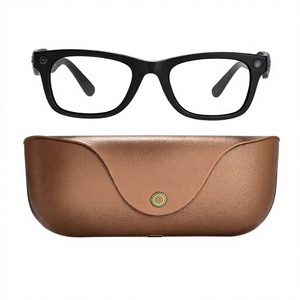
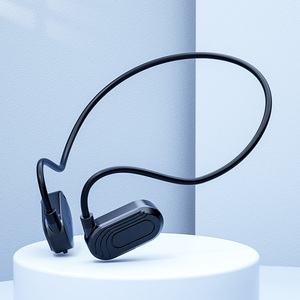

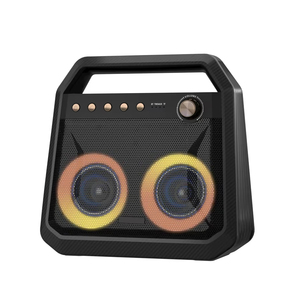
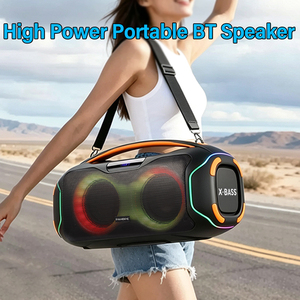
Leveraging deep industrial R&D, high-precision SMT assembly lines, and rigorous compliance architectures to power smart audio eyewear worldwide.
From initial optical-mechanical schematics to tooling injection, custom PCB layout, firmware optimization, and final packaging, our facility offers complete turnkey smart glasses OEM manufacturing under ISO9001 certified management.
Every pair of Bluetooth camera glasses undergoes 100% optical alignment testing, IPX water-resistance immersion verification, acoustic sound pressure profiling, and high-frequency Bluetooth RF spectrum evaluation before batch dispatch.
Our engineering headquarters house an anechoic acoustic testing chamber and optical darkrooms. We pioneer custom spatial audio algorithms, beamforming directional microphones, and miniaturized ultra-clear video sensor modules.
In the evolving consumer electronics landscape, purchasing CE Certified Bluetooth Camera Glasses is a non-negotiable prerequisite for enterprise importers, brand owners, and wholesale distributors entering the European Economic Area (EEA). Navigating European regulatory compliance requires an in-depth understanding of the intersecting safety, radio frequency (RF), optical, and data privacy directives that govern smart wearables equipped with digital video recorders and wireless audio Transceivers.
A valid CE Declaration of Conformity (DoC) for smart camera glasses must cover both the Radio Equipment Directive (RED 2014/53/EU) and specific EN 62368-1 audio-video safety standards. Sourcing uncertified hardware risks custom seizures, heavy regulatory fines, and legal liability under EU consumer safety laws.
Smart camera glasses utilize dual-mode Bluetooth (BT 5.0 - BT 5.3 LE) alongside Wi-Fi spectrums (2.4GHz / 5GHz) to stream HD footage and real-time audio to companion iOS/Android mobile applications. To comply with RED requirements, certified manufacturers must pass strict laboratory testing criteria:
Because camera glasses double as daily prescription frames or outdoor sun protective eyewear, the optical lenses and camera modules must adhere to stringent optical clarity and UV protection standards. Premium manufacturers incorporate TAC polarized or polycarbonate lenses certified under EN ISO 12312-1:2013/A1:2015 for Category 3 glare protection and 100% UV400 filtering. Furthermore, built-in camera LED indicators must comply with IEC 62471 to guarantee zero photobiological hazards to user eyes during prolonged wear.
Miniaturized lithium-polymer batteries integrated into frame temples (ranging from 110mAh to 300mAh) operate under rigorous thermal constraints. CE compliance mandates compliance with IEC/EN 62133-2 for secondary cells, preventing thermal runaway, overcharging risks, and physical stress failures under ambient temperatures up to 55°C.
| Architecture Component | OEM Standard Spec | High-End Enterprise Spec | CE Certification Metric |
|---|---|---|---|
| Video CMOS Sensor | 1080p @ 30fps (8.0 MP) | 4K / 2K @ 60fps EIS Stabilized | EN 62471 Optical Safety |
| Wireless Protocol | Bluetooth 5.0 LE Dual Mode | Bluetooth 5.3 + Wi-Fi 6 Direct | ETSI EN 300 328 / EN 301 489 |
| Acoustic Hardware | Dual Micro-Speakers (Open-Ear) | Quad Beamforming Mic Array + Bone Conduction | EN 50332 Sound Pressure Limit |
| Frame Material | Lightweight ABS + PC Polymer | Swiss TR90 Memory Material + Titanium Hinge | RoHS 2011/65/EU / REACH Safe |
| Battery & Charging | 120mAh Li-Po (Mag-Suction) | 280mAh Dual Temple Battery + Fast Charge | IEC 62133-2 / UN38.3 Transport |
Market trends and technology trajectories shaping global demand, bulk procurement specifications, and product innovation.
The next phase of camera glasses procurement is dominated by artificial intelligence integration. Modern buyers are demanding hardware capable of instantly communicating with cloud-based Large Language Models (LLMs). Smart camera glasses equipped with ultra-low latency microphones capture foreign speech, translating it real-time into the user's open-ear audio speakers while the camera analyzes visual context (OCR text translation). Importers should prioritize manufacturers offering customizable SDKs and BLE data pipelines optimized for AI API integration.
Traditional camera glasses that rely solely on audio feedback are transitioning into augmented reality (AR) light-waveguides. By incorporating micro-OLED optical engines into CE-certified frames, users can view navigation prompts, teleprompter text, and incoming call alerts without looking down at a mobile device. Procurement managers should focus on high-transmittance optical lenses (>85% visibility) and low power consumption displays.
Historical smart glasses suffered from front-heavy weight distribution exceeding 65g, leading to user wear fatigue. The trend in bulk manufacturing focuses on Swiss TR90 thermoplastic memory materials combined with ultra-dense flexible PCBs, reducing total frame weight below 42g. B2B buyers must specify ergonomic weight distribution ratios (40% front, 60% temple) to capture mass consumer adoption.
European privacy regulators are enforcing strict compliance regarding covert recording devices. Modern CE-certified designs feature physical, tamper-evident recording LED status indicators integrated directly into the front lens bezel. Sourcing non-compliant frames without recording notification LEDs risks severe sales bans in major markets like Germany, France, and the UK.
Answers to common commercial, technical, and regulatory questions from enterprise buyers and wholesale distributors.