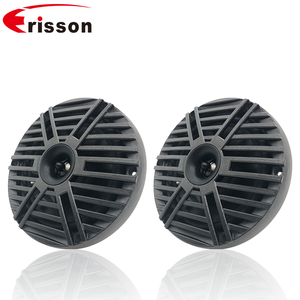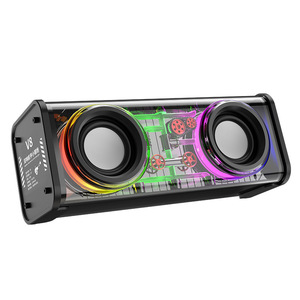
Explore our top-ranking export-grade audio devices and waterproof sports smart gear engineered for rigorous outdoor environments and high-fidelity performance.
The global sports and outdoor audio market is undergoing a seismic architectural transition. As active consumers demand flawless sound performance during extreme endurance sports, swimming, marathons, and marine environments, international buyers and brand owners require hardware manufacturing partners capable of integrating deep liquid ingress protection with studio-grade acoustic performance. China's acoustic supply chain—spearheaded by tier-one OEM/ODM manufacturers—has evolved from simple assembly operations into a sophisticated ecosystem of specialized micro-acoustic engineering, precision mold injection, chemical nano-coating, and automated RF tuning.
Achieving true waterproof performance (IPX7 to IPX8 levels according to IEC standard 60529) without damping acoustic cavity resonance requires solving fundamental physical dynamics. Traditional earbud designs rely on open acoustic vents to equalize air pressure and allow dynamic drivers to displace air for rich bass response. However, liquid ingress through these micro-apertures leads to voice coil corrosion and dynamic membrane degradation. Modern Chinese manufacturing leaders resolve this dilemma using dual-layer hydrophobic acoustic meshes, liquid silicone rubber (LSR) overmolding, and Parylene chemical vapor deposition (CVD) nano-coatings that protect internal PCBA circuitry even under prolonged hydrostatic submersion.
Multi-stage liquid silicone overmolding combined with conformal nano-coatings ensuring total water submersion protection beyond 1.5 meters for over 30 minutes.
Expanded PTFE membranes allow directional sound transmission and air pressure equalization while completely blocking water molecules and sweat acids.
Integrated state-of-the-art wireless chipsets delivering LE Audio, LC3 codec compression, and rock-solid connection stability during high-intensity motion.
For international procurement directors, category managers, and private label audio brands, specifying the correct waterproofing methodology is essential for brand reliability and product return rate mitigation. Ingress protection tests are not uniform; understanding the engineering difference between surface tension sealants and structural encapsulation directly dictates product warranty lifecycle and end-user satisfaction in sport scenarios.
| Ingress Level | Protection Benchmark | Structural Seal Mechanism | Acoustic Vent Tech | Ideal Application Scenario |
|---|---|---|---|---|
| IPX5 / IPX6 | Heavy rain, intense sweat, low/high-pressure water jets | Gasket seals, internal silicone glue rings | Basic mesh dust filters | Gym training, daily outdoor jogging, casual commuting |
| IPX7 | Temporary immersion up to 1m depth for 30 minutes | LSR liquid silicone injection + ultrasonic enclosure welding | Single-layer ePTFE hydrophobic membrane | Running in torrential rain, kayaking, cross-fit training |
| IPX8 (Industrial Grade) | Continuous submersion beyond 1.5m to 3m depth under pressure | Full PCBA Parylene CVD coating + double-chamber structural isolation | Multi-layer acoustic membrane + dynamic internal air sealing | Swimming laps, triathlon training, marine audio installations |
Our manufacturing facilities employ rigorous pressure differential testing and vacuum bubble immersion chambers for every production batch. Unlike low-tier suppliers who apply manual silicone glue application, our automated SMT lines incorporate double-sided vacuum plasma nano-coating systems. This process coats every micro-resistor, IC chip, pin solder joint, and battery connection board with a microscopic waterproof layer just 50 nanometers thick, preventing short circuits even if water breaches the exterior plastic casing.
Category leaders must anticipate structural consumer shifts to maintain retail edge and inventory velocity. Based on user intent data across major global market channels and acoustic engineering breakthroughs, we highlight four dominant trends shaping the future of waterproof sports wearables:
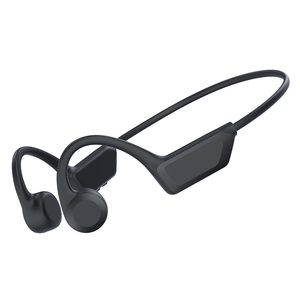
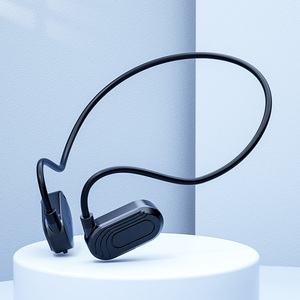
Traditional in-ear silicone tips that seal the ear canal create occlusion effect—where the user hears their own footsteps, internal heartbeat, and jaw movements during high-impact sports. Furthermore, complete noise isolation poses severe traffic hazard risks for outdoor runners and road cyclists. Open-ear directional acoustics and bone conduction transducers solve this by delivering ambient spatial awareness alongside high-definition sound. Advanced China OEM factories are now engineering dual-driver hybrid setups combining bone conduction for mid-bass resonance with directional open-air tweeters for pristine highs.
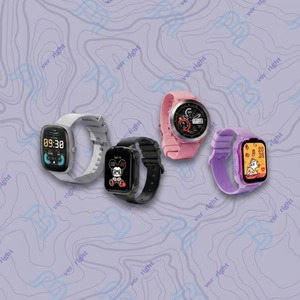
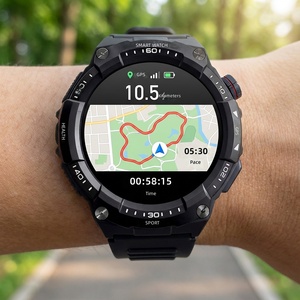
The boundary between pure audio playback and biometric tracking is disappearing. Modern sports earbuds and 2-in-1 hybrid smartwatch earbud combinations (such as the WB0043 series) integrate PPG optical heart rate sensors, blood oxygen saturation (SpO2) monitors, and 9-axis motion sensors directly into the earbud casing or housing wristband. Sourcing integrated wearables allows brands to command higher retail price points while serving fitness enthusiasts who demand unified data tracking.
Power consumption remains a primary operational barrier for miniaturized TWS sports earbuds. The adoption of Bluetooth 5.4 and upcoming 6.0 protocols introduces Low Energy (LE) Audio and the Low Complexity Communication Codec (LC3). LC3 offers vastly superior audio quality at half the data rate compared to legacy SBC codecs. This technological shift allows manufacturers to reduce battery cell size—lightening the earbud weight to under 4.5 grams per side—while increasing continuous playback time to over 10 hours on a single charge.
European and North American retail channels increasingly prioritize ESG compliance and circular economy manufacturing. Tier-1 Chinese suppliers are leading the adoption of recycled ocean-bound plastics for earbud chassis, bio-compatible silicone for sport hooks, and cobalt-free lithium batteries. Brand buyers partnering with ISO14001 certified facilities ensure effortless compliance with strict regional environmental directives such as WEEE, RoHS, REACH, and California Proposition 65.
With an engineering tradition rooted in world-class acoustic innovation and registered US R&D standards, our manufacturing network serves over 30 million active users globally. We provide full-turnkey contract manufacturing, custom OEM industrial design, and joint ODM technology development for leading consumer electronics brands, retail chains, and Amazon top sellers.
Over 25,000 square meters of ISO9001 and BSCI certified dust-free cleanroom manufacturing facilities equipped with automated SMT, ultrasonic welding, and robotic optical assembly.
In-house acoustic laboratory featuring Brüel & Kjær head-and-torso simulators (HATS) ensuring perfectly balanced frequency response curves, zero harmonic distortion, and custom app-controlled EQ profile integration.
Complete product lifecycle management from rapid 3D prototyping, custom tool making, software firmware development, tooling validation, to localized packaging customization.
Our quality control protocol executes 100% online testing across four strict inspection gates: incoming material quality control (IQC), in-process quality control (IPQC during automated SMT and casing insertion), final quality control (FQC including IPX8 pressure testing and acoustic frequency curve verification), and outgoing quality assurance (OQA prior to international shipping container loading).
Navigating international supply chain decisions requires transparent technical data and commercial clarity. Below are detailed responses to the most common questions raised by corporate procurement officers, product managers, and distributor teams.
Achieving mass-production IPX8 compliance requires a three-tiered structural and chemical protection system. First, outer enclosure plastics are bonded using high-frequency ultrasonic welding combined with custom Liquid Silicone Rubber (LSR) gasket seals around charging pins and micro-button switches. Second, acoustic nozzle vents utilize acoustic expanded PolyTetraFluoroEthylene (ePTFE) hydrophobic membranes that permit air/sound wave movement while rejecting liquid water molecules up to 3 bar hydrostatic pressure. Third, the fully populated Printed Circuit Board Assembly (PCBA) undergoes high-vacuum Parylene chemical vapor deposition (CVD) nano-coating, which encapsulates all micro-electronic components in a 50nm protective film, guaranteeing operational survival even under direct water immersion.
For standard wholesale procurement of existing catalog products with ready-to-ship neutral packaging, our minimum order quantity starts as low as 100 units to support agile market testing. For OEM custom branded production (including custom logo printing, customized Bluetooth pairing name, localized user manuals, and customized gift box packaging), the standard MOQ is 1,000 units per colorway. Custom ODM projects involving completely new mold design and tooling development require a minimum initial production run of 3,000 to 5,000 units. Standard mass production lead times are 25 to 30 business days following sample approval and deposit confirmation.
Bone conduction headsets utilize electromechanical transducers to transmit sound vibrations directly through the user's temporal bones to the inner ear cochlea, completely bypassing the eardrum and ear canal. This delivers unmatched situational safety during running or cycling and eliminates ear canal fatigue. Dynamic in-ear earbuds rely on vibrating diaphragms to move air within the ear canal, providing deeper sub-bass impact and sound isolation. For sports applications requiring both open-ear comfort and rich bass acoustics, our factory also engineers specialized directional air-conduction models that beam concentrated sound directly into the ear canal without physical blockage.
All products exported from our manufacturing facilities carry full international compliance certifications required for tier-1 retail distribution in North America, Europe, Asia-Pacific, and Latin America. Standard certifications include CE, FCC, RoHS, REACH, TELEC (MIC Japan), KC (Korea), BQB (Bluetooth SIG qualification), and UN38.3 / MSDS documentation for safe lithium battery air and ocean transportation. Factory audit reports including ISO9001:2015, BSCI, and SMETA compliance are available upon request for corporate procurement clearance.
Yes. Our in-house software and firmware development team offers comprehensive integration services. We provide custom Bluetooth firmware development—including customized prompt voices in multiple languages, personalized touch control button mapping, custom low-latency gaming modes, and optimized battery management algorithms. Furthermore, we offer white-label iOS and Android mobile applications that allow your end-users to customize EQ settings, execute over-the-air (OTA) firmware updates, and track device GPS location.
We stand behind our manufacturing quality with a standard 12-month to 24-month comprehensive factory warranty on all waterproof sports audio products. To streamline operations for overseas distributors and brand owners, we provide a dedicated spare parts allotment (FOC 0.5% to 1% spare units or components) with every bulk shipment to instantly cover localized end-user replacements. Defective units reported during warranty periods are analyzed by our quality engineering lab to implement immediate continuous improvement protocols on active production lines.