
Engineered with high-resolution Sony sensors, real-time multimodal AI integration, and lightweight ergonomic frames for global distributor & brand customization.
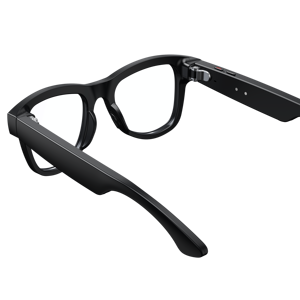
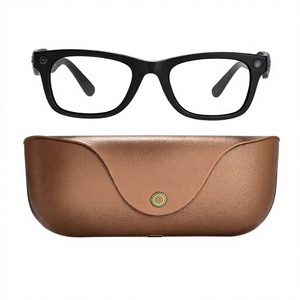
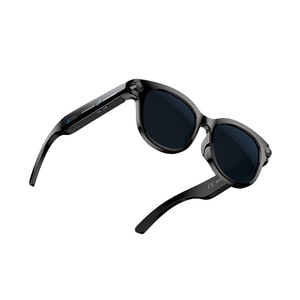
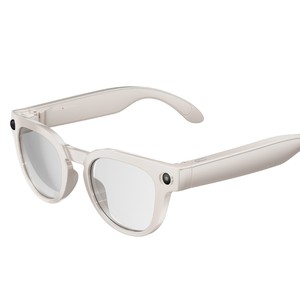
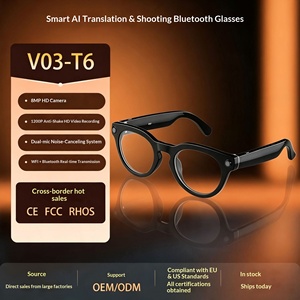
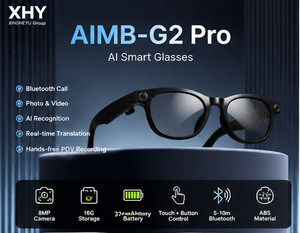
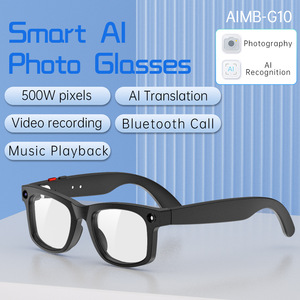
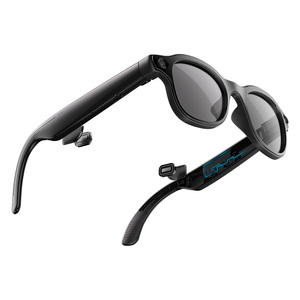
Consumer wearables are undergoing a paradigm transition from passive audio playback to active computer vision and ambient AI spatial processing. OEM/ODM procurement decision-makers require clear insights into chipset selection, optical alignment, thermal dissipation, and supply chain reliability.
As a globally recognized original manufacturer with extensive acoustic and visual engineering heritage, our enterprise combines state-of-the-art SMT (Surface Mount Technology) assembly lines with class-10,000 cleanrooms for optical alignment. The smart video glasses industry is moving away from bulk consumer gadgets toward precision-engineered wearable visual edge nodes. Modern smart glasses integrate ultra-low-power AI SoCs, wide-angle 8MP/4K CMOS image sensors, electronic image stabilization (EIS), multi-microphone beamforming array noise cancellation, and localized multi-lingual Large Language Model (LLM) execution.
For global importers, brand owners, and cross-border channel partners, establishing a resilient OEM/ODM partnership demands evaluating not only frame aesthetic trends but technical fundamentals: battery C-rate performance, thermals under continuous 1080P/4K H.265 video encoding, Bluetooth 5.4/Wi-Fi 6 latency, and strict adherence to international regulatory norms (FCC, CE-RED, RoHS, REACH, and FDA Class I medical frame standards).
Validated by over 30 million global end-users, 1.5 million verified reviews, and 200+ technology patents across acoustic, video, and wearable firmware architecture.
Over 150 dedicated hardware and software engineers specializing in camera module packaging, EIS algorithm tuning, micro-speaker baffle engineering, and low-power BLE protocol stacks.
Every batch undergoes rigorous environmental stress testing: 10,000-cycle temple hinge durability tests, IPX4-IPX8 water ingress validation, drop impact simulation, and thermal imaging checks under peak video capture.
From industrial design (ID) rendering, mechanical engineering (MD), rapid 3D prototyping, to custom PCBA tooling, SDK API coupling for iOS/Android, and bespoke retail packaging.
Fully experienced in delivering certified merchandise to North America, Europe, Japan, and Southeast Asia. UN38.3 lithium battery MSDS certification ensures smooth air/sea freight logistics.
Understanding the hardware architecture shifts driving next-generation video capture, real-time audio translation, and optical frame design.
Modern smart glasses are evolving into hands-free AI interfaces. By integrating multimodal large language models (such as ChatGPT-4o and custom speech translation micro-engines), users can point the 8MP/4K camera at foreign text, objects, or conference presentations and receive sub-second voice translations directly into open-ear directional audio channels.
Camera module integration requires overcoming strict weight and thermal boundaries. Factories are utilizing custom 8MP and 4K CMOS sensors with built-in Electronic Image Stabilization (EIS). This compensates for head movements during sports, walking, or vlog shooting, yielding stable 1080P/60fps or 4K/30fps footage without bulky gimbal hardware.
Acoustic design focuses on sound privacy and crystal-clear voice pick-up. Dual-beamforming ENC (Environmental Noise Cancellation) microphones filter out ambient wind and transit noise, while micro-baffle open-ear speakers channel music and AI voice prompts straight to the ear canal with minimal sound leakage to nearby bystanders.
Standardized engineering tiers for OEM custom development and factory production planning.
| Feature Category | Entry-Level Video Glasses | Mid-Tier AI Sports Eyewear | Flagship 4K AI Multimodal Eyewear |
|---|---|---|---|
| CMOS Sensor & Resolution | 2.0 MP (1080P / 30fps) | 8.0 MP (1080P / 60fps EIS) | 8.0 MP / 4K UHD (30fps EIS + HDR) |
| Main SoC Processor | Dual-Core RISC Processor | Quad-Core Low-Power AI Chipset | Advanced Dual-Engine NPU + DSP SoC |
| AI Voice & LLM Capabilities | Basic Voice Assistant pass-through | Real-Time 2-Way Audio Translation | ChatGPT-4o Multimodal Vision & OCR |
| Battery Capacity & Life | 180mAh (45-60 min capture) | 220mAh - 300mAh (75 min capture) | 300mAh + Charging TWS Storage Case |
| Frame Material & Weight | PC Material (~48g) | TR90 Memory Polymer (~42g) | Ultra-Light TR90 + Titanium Hinge (~38g) |
| Lens Specifications | UV400 Polarized Lens | Anti-Blue Light / Photochromic | Magnetic Quick-Release Prescriptions |
Key supply chain dynamics, factory selection benchmarks, and risk mitigation tactics for enterprise buyers in 2026.
Procuring smart video glasses differs significantly from traditional audio hearables or standard sunglasses. As an OEM/ODM buyer, navigating the supply chain requires evaluating key technical parameters to avoid high field-return rates (RMA) and brand damage:
Global consumers demand stylistic versatility. Modern factory platforms utilize quick-release magnetic lens packages allowing users to swap between UV400 outdoor sunglasses lenses, anti-blue light gaming lenses, and photochromic prescription inserts without replacing the electronic temples.
Continuous video encoding generates localized heat near the user's temples. Top-tier ODM exporters integrate graphene thermal dissipation sheets and aluminum micro-heatsinks within the TR90 frame, ensuring temple skin contact temperature remains below 38°C during prolonged camera use.
Battery life remains a pivotal buying factor. Sourcing managers are increasingly specifying models supplied with custom protective charging cases (equipped with 1200mAh to 2500mAh internal batteries), capable of recharging the glasses 3 to 5 times over magnetic Pogo-pin contacts.
Detailed answers to technical, commercial, and regulatory questions asked by global procurement directors.
A: For standard RTS (Ready-to-Ship) neutral branding, our MOQ starts at 50 to 100 units. Custom logo silk-screening and customized packaging require an MOQ of 500 units. For full ODM projects involving custom tooling molds, frame re-engineering, and bespoke PCBA architecture, the standard baseline MOQ is 2,000 to 3,000 units.
A: Our engineering team utilizes advanced dynamic voltage and frequency scaling (DVFS) alongside internal copper-foil and graphene heat-spreader layering. This channels internal processor heat outward away from human contact areas, maintaining skin touch points at safe levels under 38°C in accordance with IEC 62368-1 safety standards.
A: Yes. We provide comprehensive iOS and Android SDKs alongside BLE/Wi-Fi communication protocols. Your software team can easily connect the hardware microphone and camera stream directly to your proprietary AI application, custom ChatGPT API key, or enterprise cloud translation endpoint.
A: All our smart video glasses series are fully compliant and hold valid certificates for FCC (USA), CE-RED (Europe), RoHS, REACH, TELEC (Japan), and UN38.3 + MSDS (Air/Sea lithium battery transport certification). Optical lenses also meet ANSI Z80.3 UV protection standards.
A: Standard evaluation samples are dispatched within 3 to 5 working days. Customized branded samples (with custom firmware and logo printing) require 10 to 14 days. Full mass production orders are completed within 25 to 35 calendar days following golden sample confirmation.
A: We utilize high-grade TR90 Swiss EMS memory polymer for temples and optical-grade polycarbonate or TAC polarized lenses. Every batch undergoes 10,000-cycle temple flex stress testing, high-impact drop tests, and 48-hour salt spray anti-corrosion testing.
Contact our senior OEM/ODM engineering and export team today to request complete product catalogs, factory audit reports, engineering sample units, and confidential price quotes.