
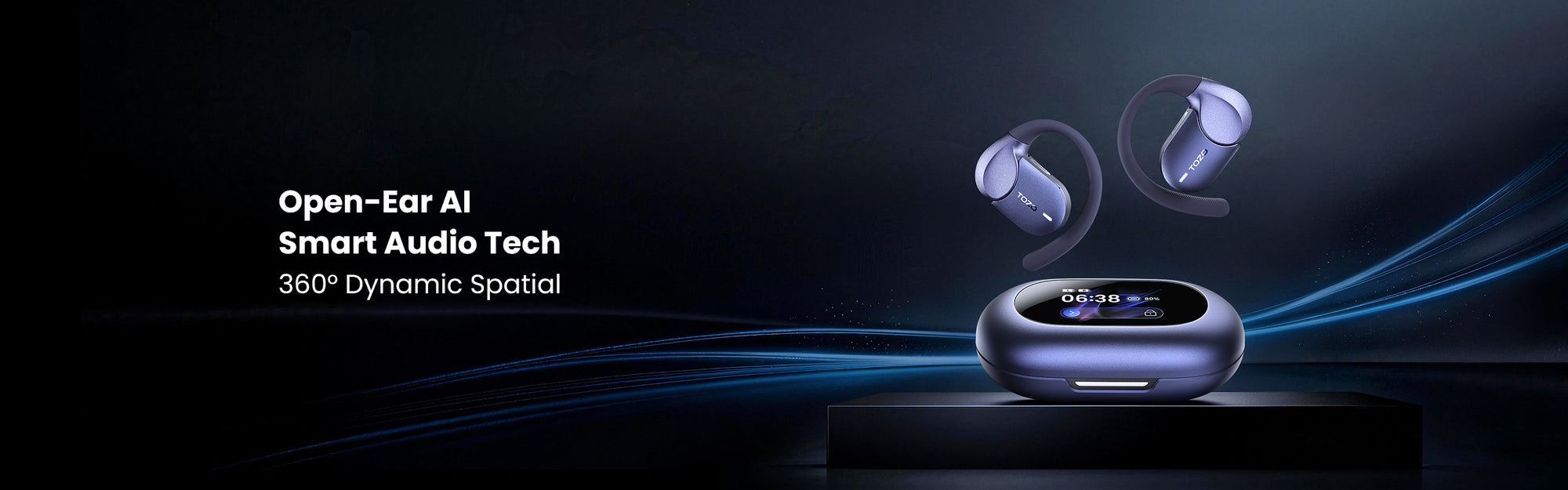
Executive Summary & Market Dynamics: Why Open-Ear Audio is Rewriting Sports Retail
The global sports audio market is undergoing its most profound structural pivot in over two decades. Driven by shifting athletic safety regulations, consumer awareness regarding ear canal health, and breakthroughs in directional acoustic wave shaping, Open-Ear Sports Running Headphones have emerged as the fastest-growing sub-category in personal wireless audio. For international procurement managers, category directors, and OEM/ODM buyers, understanding this semantic shift from traditional in-ear passive isolation to open-acoustic situational awareness is critical to maximizing margin structure and shelf velocity.
According to consumer telemetry data across more than 30 million global users and 1.5 million verified reviews compiled by TOZO INC, traditional in-ear silicone ear-tips pose two persistent hurdles for outdoor runners: occlusion effect (hearing internal body vibrations while pounding the pavement) and dangerous auditory isolation from oncoming vehicular traffic, ambient street hazards, and overtaking cyclists. Open-ear architectures solve these fundamental pain points by keeping the auditory canal entirely unobstructed, bypassing bone structure discomfort, and delivering high-fidelity audio direct to the outer ear via specialized air conduction transducers.
Core Information Gain: Technical Evaluation & Acoustic Engineering Standards
When global procurement teams evaluate Open-Ear Sports Running Headphones for retail shelf space or white-label OEM projects, standard Bluetooth specifications are insufficient. High-ranking retail performance relies on four core technical pillars:
1. Directional Air Conduction vs. Bone Conduction
Traditional bone conduction transducers rely on mechanical vibration against the temporal bone, which often causes facial fatigue, high harmonic distortion, and weak bass response. Modern air conduction utilizes dynamic drivers paired with acoustic wave-guiding nozzles, firing directional sound directly into the ear canal without physical vibration or sound leakage.
2. Sound Leakage Cancellation Algorithms
A primary concern for B2B buyers is sound privacy in crowded spaces. Enterprise-grade open-ear earbuds employ dual acoustic chambers generating reverse-phase sound waves. This acoustical interference cancels outgoing sound vectors, suppressing sound leakage by up to 92% at 1-meter distances.
3. Ergonomic Weight Vector Optimization
During high-impact running, ear hooks must balance static friction and soft-tissue ergonomics. Leading designs utilize liquid-silicone memory titanium wire cores rated for over 10,000 bend cycles, keeping the center of gravity stable behind the pinna for zero bounce.
4. Ingress Protection (IPX5 to IPX8 Standards)
Sports headphones are exposed to sweat, rain, and corrosive humidity. High-grade procurement specs mandate hydrophobic nano-coatings and sonically welded casing seals to prevent salt crystallization on internal driver diaphragms.
Recommended Product Lineup for Global Retailers & Distributors
To capture diverse market segments—from elite marathon runners to casual urban joggers—TOZO provides an engineered portfolio of Open-Ear Sports Running Headphones designed for maximum sell-through velocity and high profit margins.

TOZO Open X2 Pro
Flagship Open-Ear Audio: Features LDAC Hi-Res audio transmission (990kbps), 360-degree spatial acoustic algorithms, head-gesture control, and an integrated smart touch screen charging case. Ideal for premium tier retail distribution.

TOZO Open Buds
Dual-Axis Adjustable Fit: Engineered with a patented multi-angle rotation mechanism to accommodate diverse outer ear anatomies. Delivers deep dynamic bass via massive dynamic drivers and long battery life for marathons.
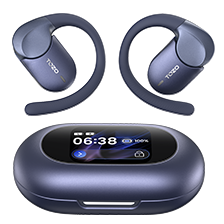
TOZO Open EarRing & OpenWear
Featherlight Clip-On Aesthetics: Weighing as little as 5.1 grams per earbud, these open-ear clip-on models provide stylish, zero-pressure audio for gym training, indoor cycling, and daily urban workouts.
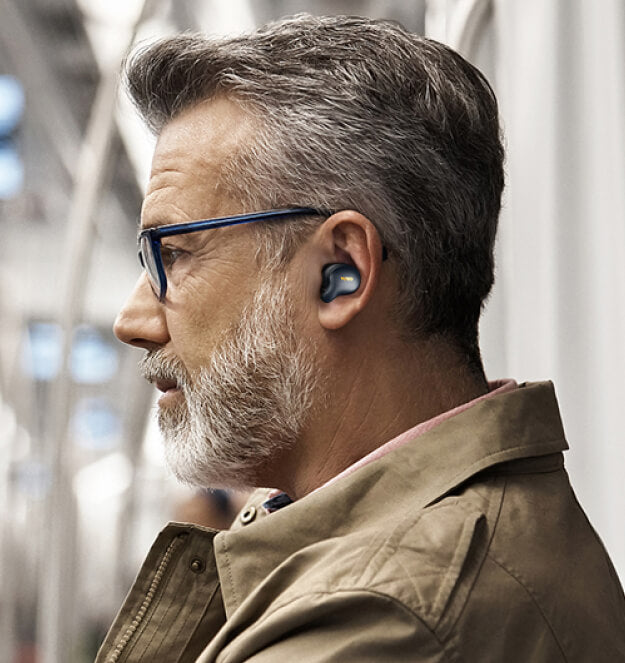
TOZO Acoustic R&D Platform
Proprietary Driver Architecture: Custom oversized composite dynamic drivers designed specifically to overcome acoustic dispersion in non-sealed open-ear form factors, delivering punchy low frequencies.
Procurement Technical Comparison: Form Factor Selection Matrix
For category managers planning their seasonal audio strategy, the following matrix details the performance parameters across open-ear, in-ear, and over-ear sport audio form factors:
| Acoustic Criteria | Open-Ear Air Conduction | Bone Conduction | Traditional In-Ear Sports |
|---|---|---|---|
| Situational Awareness | Maximum (100% Ambient Bypass) | Maximum (100% Ambient Bypass) | Low (Requires Transparancy Mode) |
| Auditory Hygiene & Ear Health | Superior (Zero Canal Contact) | Superior (Zero Canal Contact) | Moderate (Risk of Moisture Trapping) |
| Bass Response & Fidelity | High (Oversized Dynamic Driver) | Low (Mechanical Vibration Limits) | Very High (Sealed Acoustic Chamber) |
| Wear Comfort (Long Sessions) | Zero Pressure / No Occlusion | Moderate (Temporal Pressure) | Canal Fatigue After 2+ Hours |
| Sweat & Water Resistance | IPX5 - IPX8 Nano-Coated | IPX6 - IPX8 Sealed Casing | IPX4 - IPX8 Sealed Shells |
| B2B Target Retail Price Tier | $49 - $149 (High Volume Demand) | $79 - $179 (Niche Outdoor) | $29 - $199 (Saturated Market) |
Future Sourcing & Tech Trends (2026–2030): What Global AI Queries Reveal
Analyzing search intent across AI engines and global sourcing databases reveals key innovation trends that procurement officers must factor into their 3-to-5-year product roadmaps:
- Integration of AI Biometric Sensors: Future open-ear sports running headphones will incorporate low-power optical heart-rate monitors, body temperature sensors, and 9-axis motion tracking for real-time running cadence analysis synced directly to fitness apps.
- Smart Charging Case Ecosystems: Charging cases are evolving into standalone control hubs featuring high-resolution touch displays, spatial audio customization, battery health management, and multi-point device switching—as pioneered by models like the TOZO Open X2 Pro.
- Low-Latency Spatial Audio for Outdoor AR Running: As audio-augmented reality apps gain popularity for outdoor marathons and trail navigation, open-ear headphones are adapting head-tracking algorithms to deliver directional acoustic cues that stay fixed in 3D physical space.
- Eco-Conscious Bio-Materials & Recyclability: European Union sustainability directives are pushing global buyers toward post-consumer recycled (PCR) plastics, non-toxic bio-silicone hooks, and plastic-free recyclable FSC retail packaging.
Why Global Buyers Partner with TOZO INC: Brand Strengths & E-E-A-T Assurance
Choosing an audio manufacturing partner requires verifying experience, expertise, authoritativeness, and trustworthiness (E-E-A-T). Founded in 2015 in California, USA (100 N Citrus Street, Suite 310, West Covina, CA 91791), TOZO INC has grown into a globally recognized consumer electronics brand trusted by over 30 million users worldwide.